Commercial Storm Damage in Tanglewood, IN
Storm losses in Tanglewood get a drying plan sized to the building, with readings taken at the same spots daily.
Need Commercial Storm Damage in Tanglewood? Tanglewood Water Restoration answers 24/7 with certified crews, fast on-site response, and documentation built for your insurance claim. Call (463) 223-3831 now.
- Service: Commercial Storm Damage for Tanglewood homeowners
- Service area: Tanglewood, IN and surrounding areas
- Response time: Same day emergency response for Tanglewood; 24/7 availability
- Licensed and insured (License #RC21100059)
- Serving Tanglewood, IN since 2018
Commercial Storm Damage for Tanglewood Businesses
Water's coming through the roof deck of your Tanglewood building and the storm has already moved on. Ponded water over a failed drain finds the weakest seam and keeps feeding it long after the rain stops. Tanglewood Water Restoration sends a crew to commercial water intrusion calls in Tanglewood, IN within two hours with extraction units, dry in materials, and the moisture readings that tell you how far the water already traveled.
Tanglewood Water Restoration writes commercial storm scopes line by line, from the emergency dry in to the last ceiling tile, with a reading or a photo behind each item. You can compare it apples to apples with any other bid for your Tanglewood building. If another scope replaces more ceiling or insulation, ask for the readings that support it.
Property managers get a daily note from the Tanglewood Water Restoration team with yesterday's readings, what moved, and what's planned. Photos come attached. If a reading goes the wrong way the note says so and says what's changing, because the person who has to brief ownership on a loss in Tanglewood needs the actual numbers in hand before that conversation starts.
Tanglewood Water Restoration invoices the full scope of work performed on your Tanglewood building, and every line ties to the log. Equipment gets pulled the day the readings justify pulling it, and the log shows which day that was, so nothing on the invoice depends on anybody's memory of how long the job ran. Coverage questions stay with you, your broker and your carrier.
Tanglewood Water Restoration takes commercial storm intrusion calls in Tanglewood and across Hamilton County around the clock. Bring the floor plan if you've got one and the crew will mark it up while they map moisture. The moisture map is yours to hand to ownership.
Signs You Need Commercial Storm Damage Restoration
If you notice any of these in your Tanglewood building, schedule a free inspection before the issue worsens.
Water dripping from a light fixture, an air diffuser, or a sprinkler escutcheon after a hard rain
Raised access floor panels that feel damp, with water showing beneath them in a telecom room
Vinyl cove base curling or pulling away from the wall along an exterior wall
Water standing in a elevator pit, or a pit pump that's been cycling longer than usual
Bubbles, blisters, or soft spots underfoot when you walk a low slope membrane
Ceiling tiles sagging, stained brown at the center, or crumbling along the grid in one area of a floor
Brown water stains on the ceiling around a rooftop unit's duct drop after each rain
Interior wall base swelling, delaminating, or pulling away from the gypsum behind it
Light fixtures out in one zone of the ceiling grid after a storm, with the breaker holding
Vinyl tile or glue down carpet lifting at the seams out in the middle of a floor plate
How Tanglewood Water Restoration Handles Commercial Storm Damage
We follow these steps in order on every Tanglewood job.
Two Hour Dispatch
A crew dispatches to your Tanglewood commercial property within two hours of the call with extraction units, dry in materials, thermal imaging and moisture meters. Work starts on arrival while the team confirms building access, after hours contacts, and which spaces have to stay open.
Moisture Mapping
Every affected space gets walked with thermal imaging and both penetrating and nonpenetrating meters. Readings are keyed to a floor plan by room or column line, so the scope covers where the water went and leaves dry areas alone.
Occupied Space Planning
Suites and corridors that must stay in service get marked on the plan before any equipment is staged, along with where the barriers go. The loud work is scheduled for hours when the space is empty.
Containment and Air Control
Barriers go up at a corridor wall or partition line so one wet bay doesn't shut a whole floor. Negative air machines with HEPA filtration run where materials are coming out, and the crew keeps equipment clear of egress paths.
Equipment Out and Space Release
As each area reaches its dry goal, the equipment comes out of it and the space goes back to the tenant. The release date and final readings for every area go in the file.
Commercial Storm Damage in Tanglewood
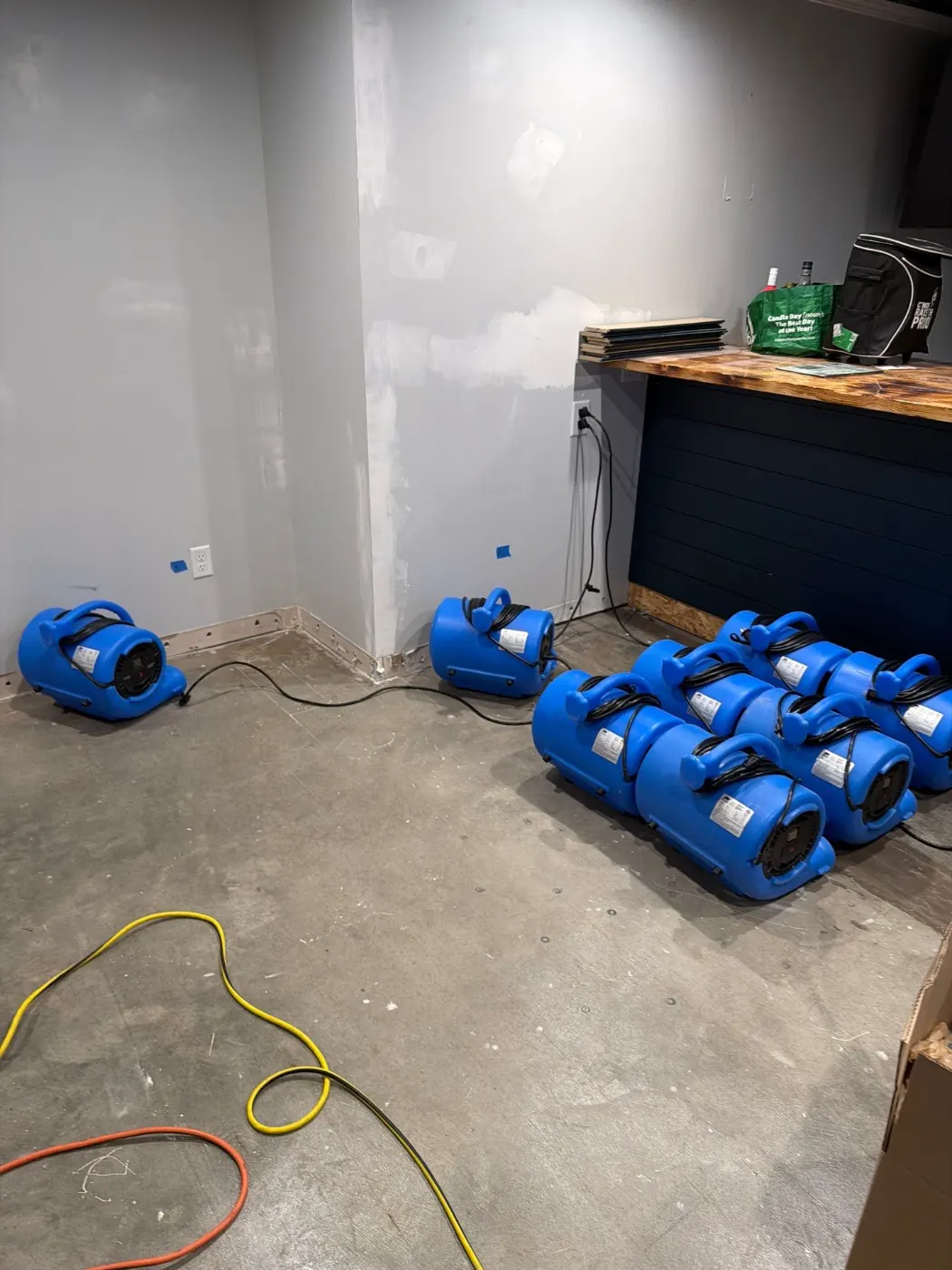
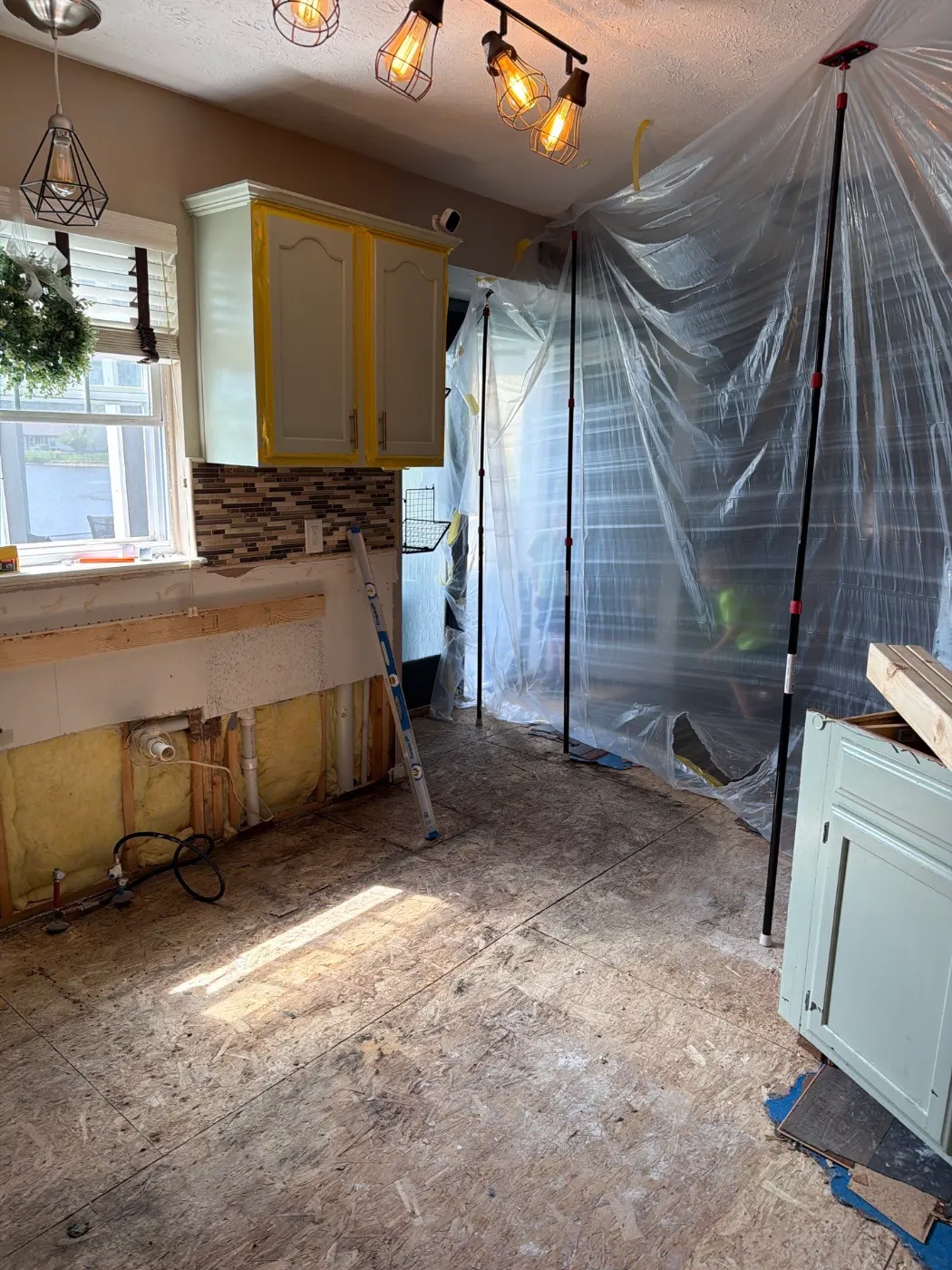
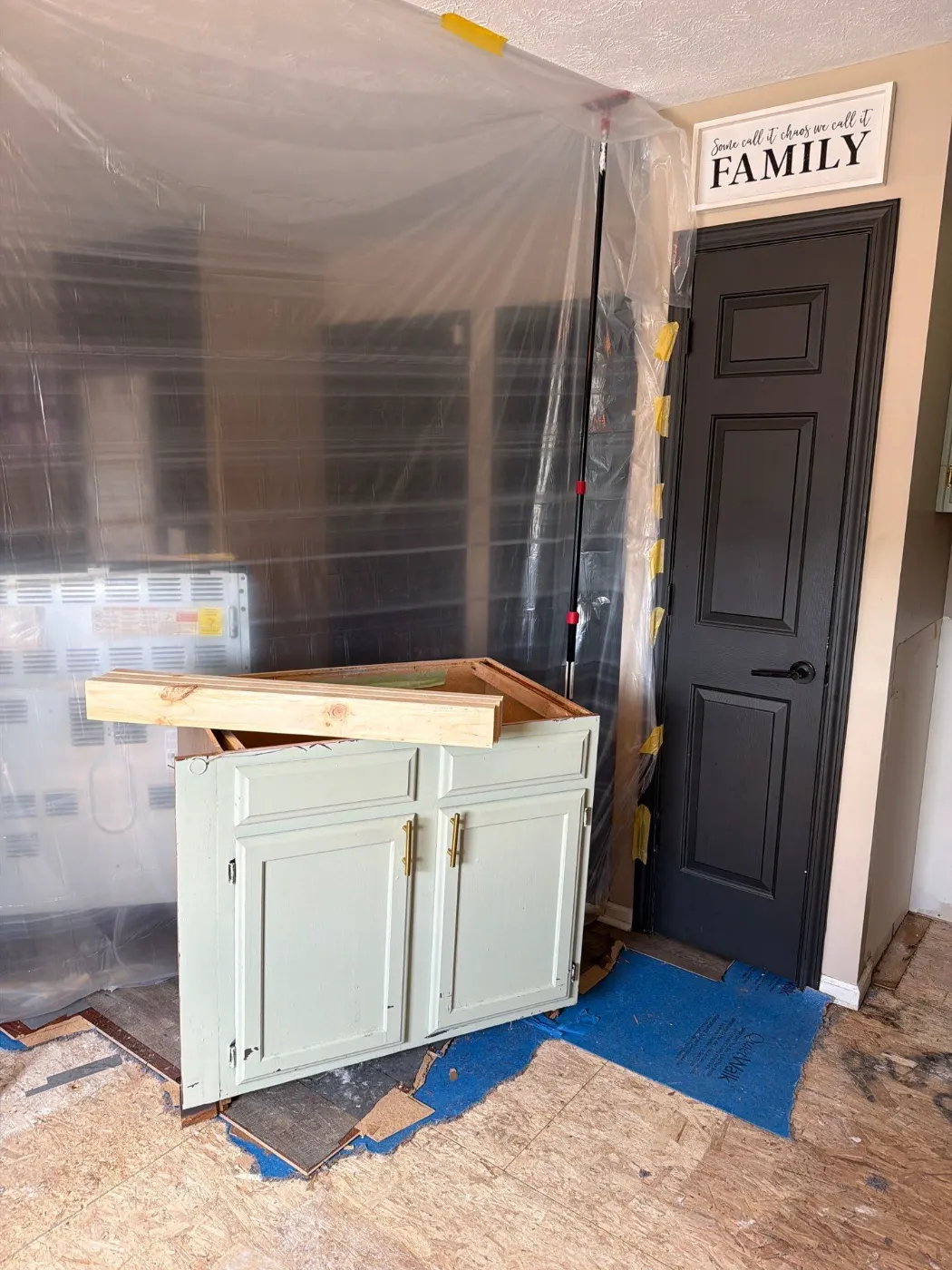
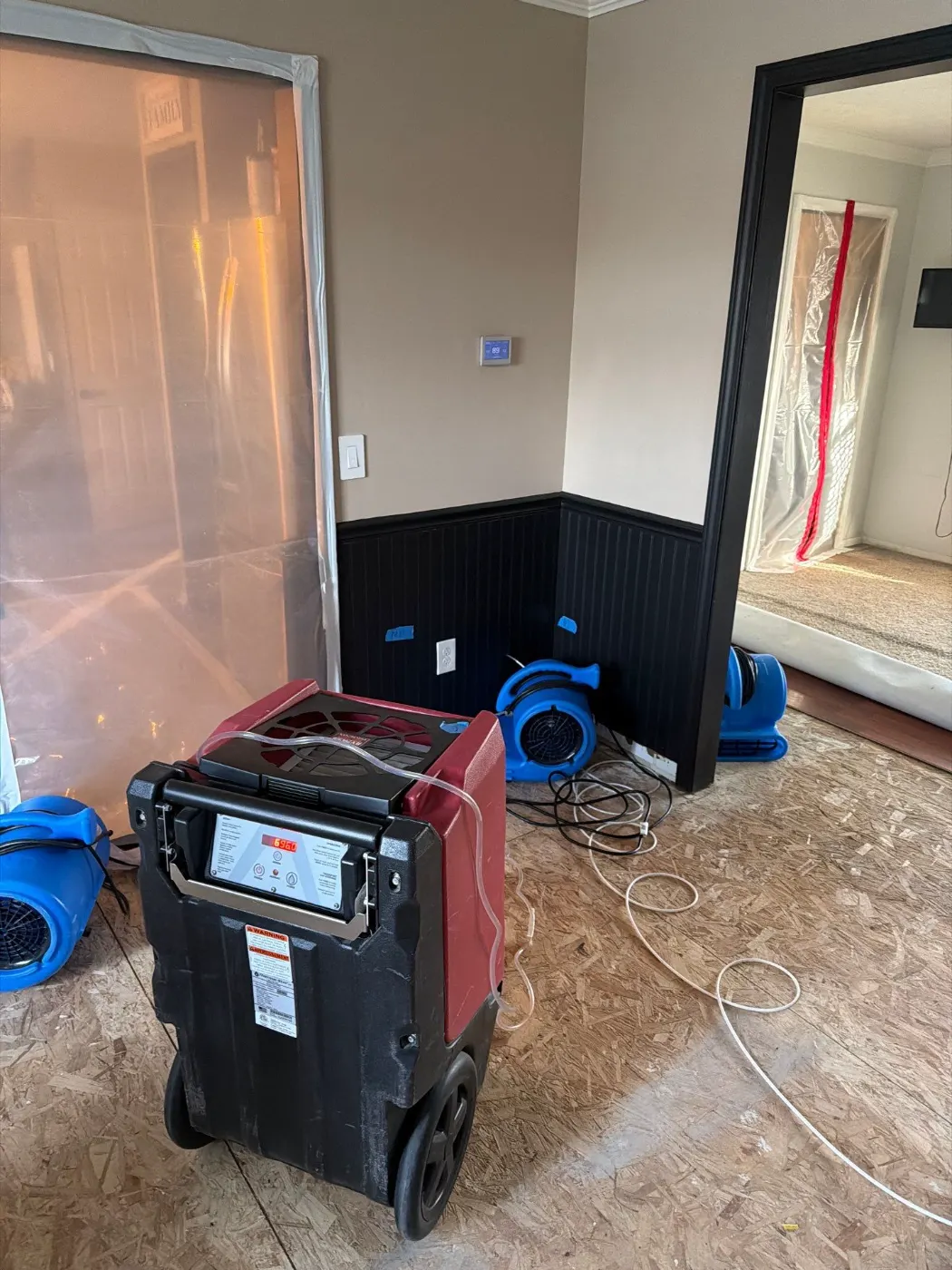
Photographs from real commercial storm damage jobs completed by our crew in Tanglewood and surrounding areas.
Commercial Storm Damage FAQ
Questions Tanglewood property managers ask us about commercial storm damage restoration.
Guidance and Standards for Commercial Storm Damage
- The National Weather Service office in Indianapolis posts summaries of recent central Indiana storm and flood events. NWS Indianapolis Event Summaries
- The ANSI/IICRC S500 is the published standard for professional water damage restoration. The current edition is the Fifth Edition, 2021. IICRC S500 Standard
Tanglewood Neighborhoods We Serve
We take commercial storm damage calls in every part of Tanglewood. Pick your neighborhood for local details.
Other Restoration Services in Tanglewood
Tanglewood Water Restoration handles the full scope of restoration work. Explore our other services below.
Water Damage Restoration in Tanglewood
24/7 emergency response. IICRC certified water restoration from extraction to full dry out.
Learn more →Basement Flooding in Tanglewood
Basement water emergencies handled fast. Extraction, drying, mold prevention.
Learn more →Sewage Cleanup in Tanglewood
Category 3 biohazard cleanup. Full containment, decontamination, structural restoration.
Learn more →Request Commercial Storm Damage Restoration
Reach Us Directly
Our team is available 24/7 for emergencies and ready to schedule inspections during business hours.
Need Immediate Help?
For active water or mold emergencies, call us directly. We are available 24/7.